Skip to content
Inês Carvalho

Deep-sea ecologyLisbon, Portugal

Dr. Inês Carvalho, deep-sea ecologistFollowing the light all the way down.

I study how animals between 200 and 1000 meters make light, see it and use it to hunt and hide. Those signals hold the midwater food web together.

Station
38.6500° N, 9.4000° W
Surface temperature
18°C
Visibility
22 m

0 to 200 m

Light
100 to 1%
Temperature
14 to 21°C
Pressure
1 to 21 atm

Epipelagic

Sunlight zone

About

A working life spent below the waterline

I am a deep-sea ecologist based in Lisbon. My research follows bioluminescence through the mesopelagic food web: which animals flash, glow or hide their silhouettes, who is watching and what that light decides about who eats whom.

23Expeditions
3Ocean basins
3870Deepest dive, m
31Publications

I lead the Midwater Light Lab at the Tagus Marine Research Institute, with four doctoral students and two technicians. Most years I spend six to eight weeks at sea.

Based in
Lisbon, Portugal
Institute
Tagus Marine Research Institute
Lab
Midwater Light Lab
Focus
Bioluminescence and mesopelagic food webs
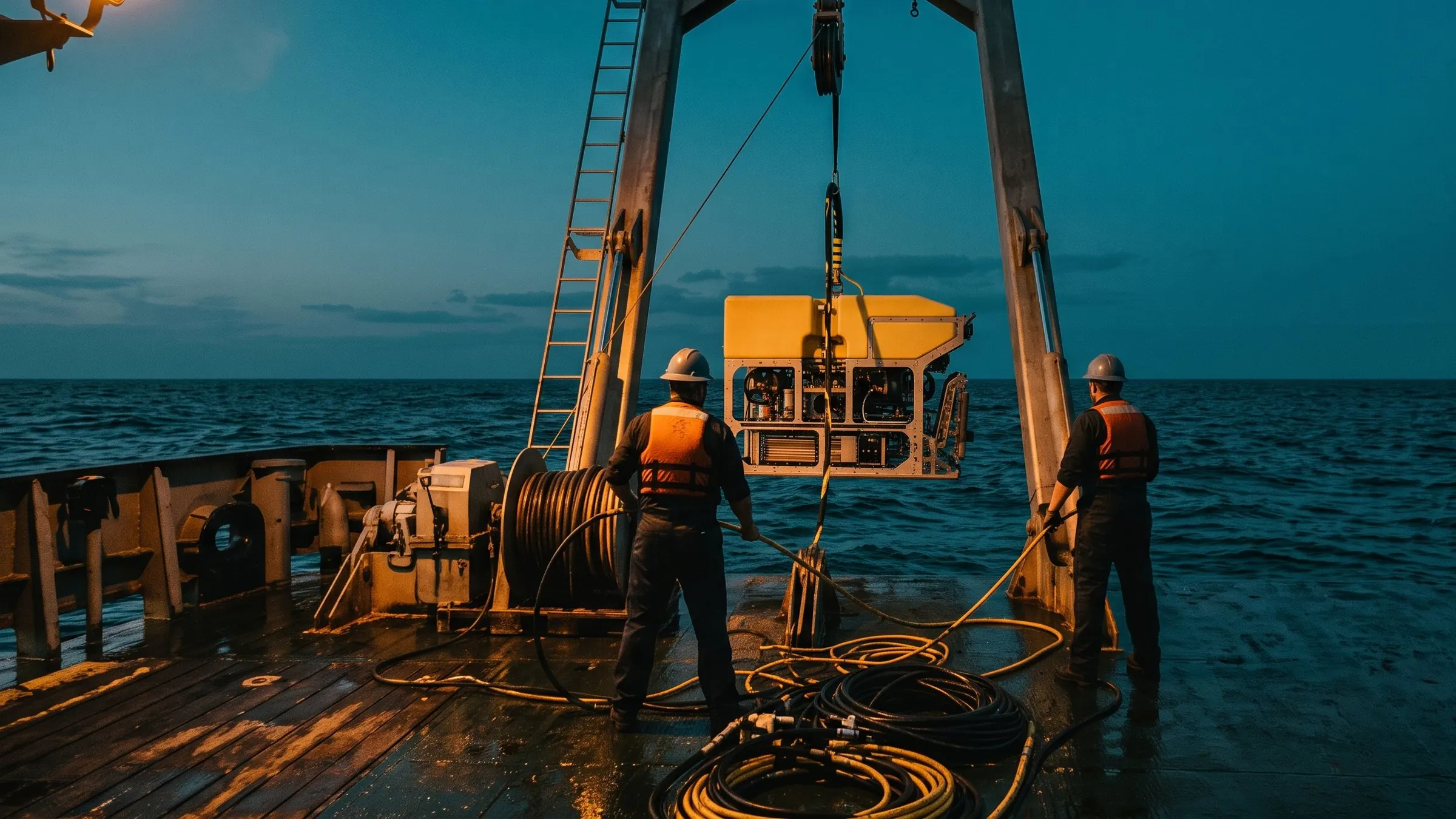
Two crew in hard hats and orange life vests, seen from behind, steady a yellow and white remotely operated vehicle that hangs from the stern A-frame of a research vessel at blue hour, with a winch and coiled cables on the wet deck.
ROV launch at blue hour on the aft deck of RV Vento Sul, Gorringe Bank survey, 2024.

Field methodsGorringe Bank survey, 2024

How the dark gets measured

Every cruise runs four methods side by side, so what the sonar hears, the cameras see and the water carries can be checked against each other.

280018000800St. 01St. 02St. 03St. 0411.70° W11.65° W11.60° W11.55° W11.50° W36.60° N36.55° N36.50° N36.45° N
  1. 01

    Acoustic survey

    Multibeam passes map the seafloor while split-beam echosounders at 38 and 120 kHz track the deep scattering layer as it rises at dusk.

    Multibeam and split-beam sonar
  2. 02

    ROV transects

    Fixed-depth transects with a low-light camera and red illumination, which most midwater animals cannot see, so behavior is recorded undisturbed.

    Remotely operated vehicle
  3. 03

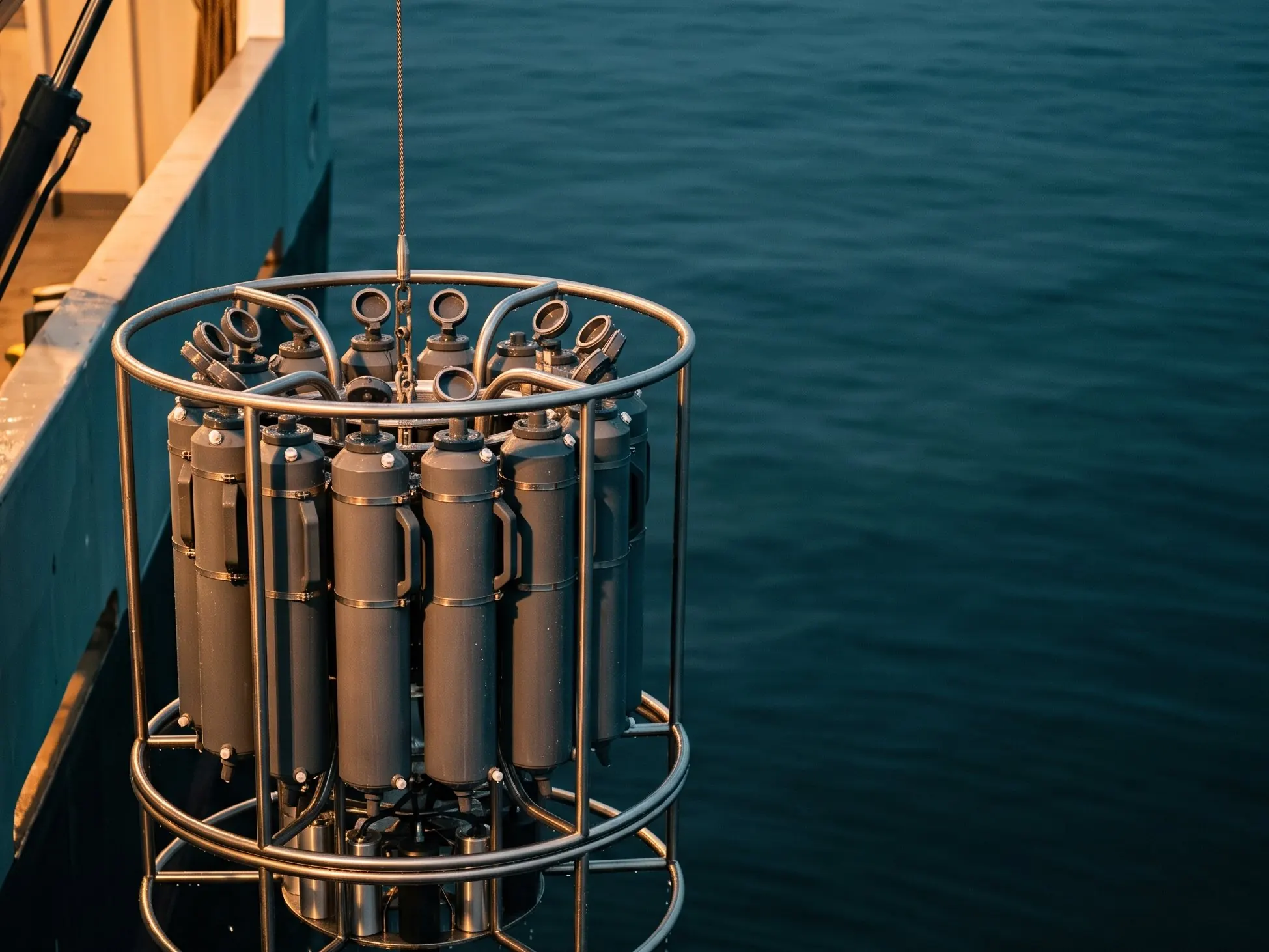
    Water column profiling

    CTD casts with oxygen and fluorescence sensors give each dive its context, with Niskin bottles closed at the depths where the cameras saw activity.

    CTD rosette
  4. 04

    Environmental DNA

    Five liters of seawater per depth, filtered on deck and frozen, recover fragile gelatinous animals that nets destroy and cameras miss.

    Filtered seawater
A round stainless steel frame holding a ring of plain gray sampling bottles hangs dripping on a cable beside a teal ship's hull, lit by low warm sun over dark water.
A CTD rosette goes over the side in the late sun for an oxygen profile off Cabo Verde.
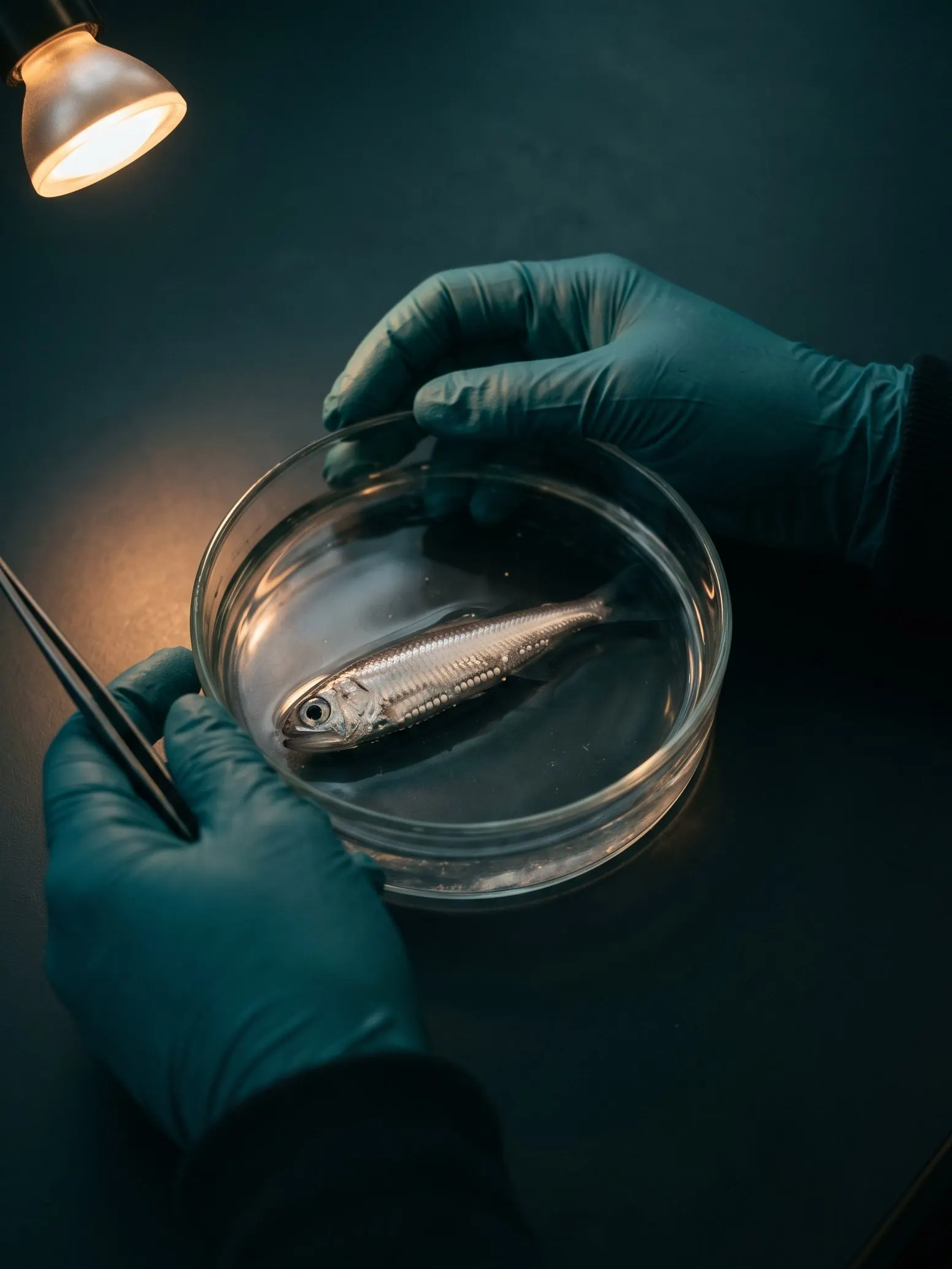
Hands in teal nitrile gloves hold a shallow glass dish with a small silver lanternfish, rows of tiny light organs along its flank, forceps in the left hand and a desk lamp lighting the dish from the upper left.
Sorting a lanternfish from a midwater net haul in the ship lab.

200 to 1000 m

Light
Under 1%
Temperature
5 to 14°C
Pressure
21 to 100 atm

Mesopelagic

Twilight zone

Selected workFive of 23 expeditions

Expeditions, logged by depth

Five cruises from the last six years, from a seamount off Cape St. Vincent to a hydrothermal plume on the Mid-Atlantic Ridge.

Expedition 01 of 05

Gorringe Bank seamount survey

Mapped the northern flank of the Gorringe Bank aboard RV Vento Sul, then flew eleven ROV transects from 300 to 2950 m to count bioluminescent animals by depth. The survey added 14 midwater species to the regional record.
Coordinates
36.5300° N, 11.5700° W
Max depth
2950 m
Season
2024
Partner
Iberian Seamount Network
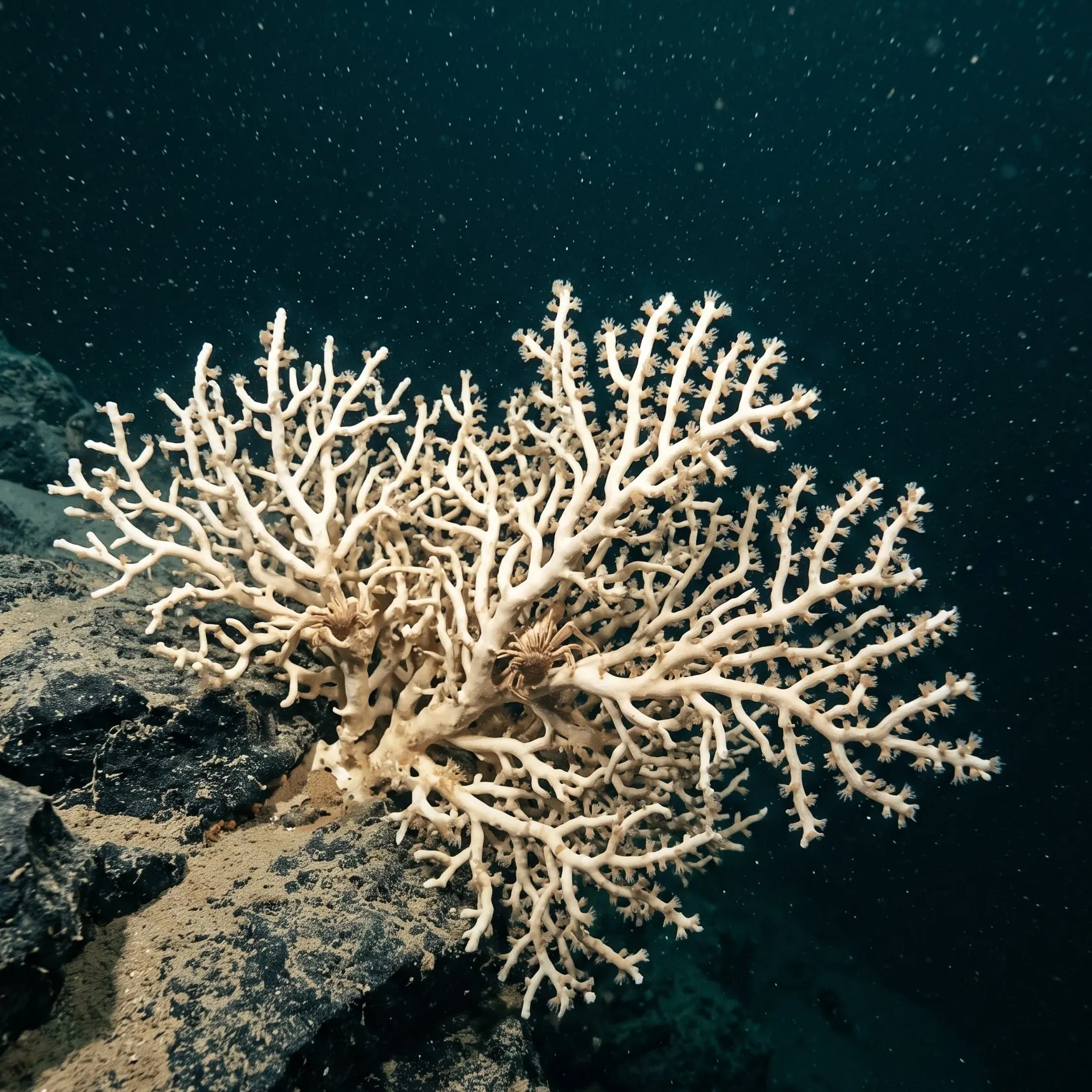
A branching ivory cold-water coral colony spreads like a small tree from a dark basalt ledge, two squat lobsters in its branches and marine snow drifting in the black water.
Cold-water coral on the northern flank of the Gorringe Bank, ROV transect at 860 m.

Expedition 02 of 05

Oxygen minimum zone off Cabo Verde

Ran 38 CTD casts across the low-oxygen layer northeast of São Vicente and paired each profile with net tows for lanternfishes and krill. Lanternfish biomass dropped by half wherever oxygen fell below 60 micromoles per kilogram.

Coordinates
17.6000° N, 24.2500° W
Max depth
1200 m
Season
2022
Partner
Atlantic Low Oxygen Project
00000250050007501000ThermoclineOxygen minimumTemperatureSalinityOxygen

Expedition 03 of 05

Twilight migration in the Bay of Biscay

Kept two upward-looking echosounders moored at 1000 m for five years to follow the deep scattering layer through each dusk and dawn. Net hauls from RV Northern Lantern matched the acoustic layers to lanternfishes and siphonophores.

Coordinates
45.5000° N, 5.0000° W
Max depth
1000 m
Season
2019 to 2024
Partner
Biscay Pelagic Observatory
Scattering layerSchoolSeafloor return

Expedition 04 of 05

Crown jellies of the Condor seamount

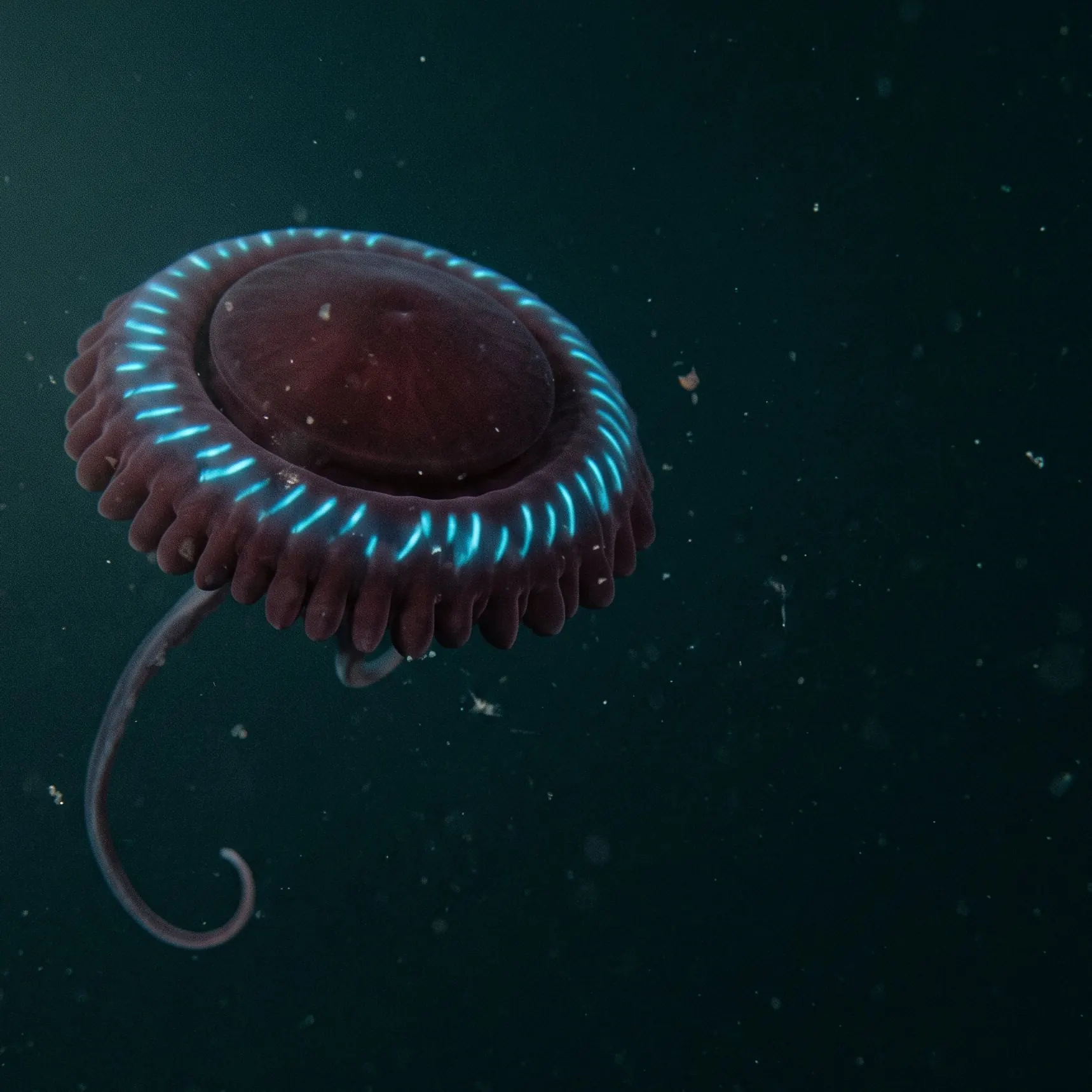
Filmed the pinwheel alarm display of the crown jelly Atolla wyvillei under red light, then set off displays with an LED lure to time each flash. The display draws in larger predators within seconds, which supports the burglar alarm hypothesis.

Coordinates
38.5500° N, 29.0300° W
Max depth
1450 m
Season
2025
Partner
Azores Deep Ecology Group
A dark maroon crown jelly seen from slightly above in black water, a broken ring of teal light glowing around its bell and one long tentacle curling down to the left.
The alarm display of a crown jelly, Atolla wyvillei, recorded at 1450 m over the Condor seamount.

Expedition 05 of 05

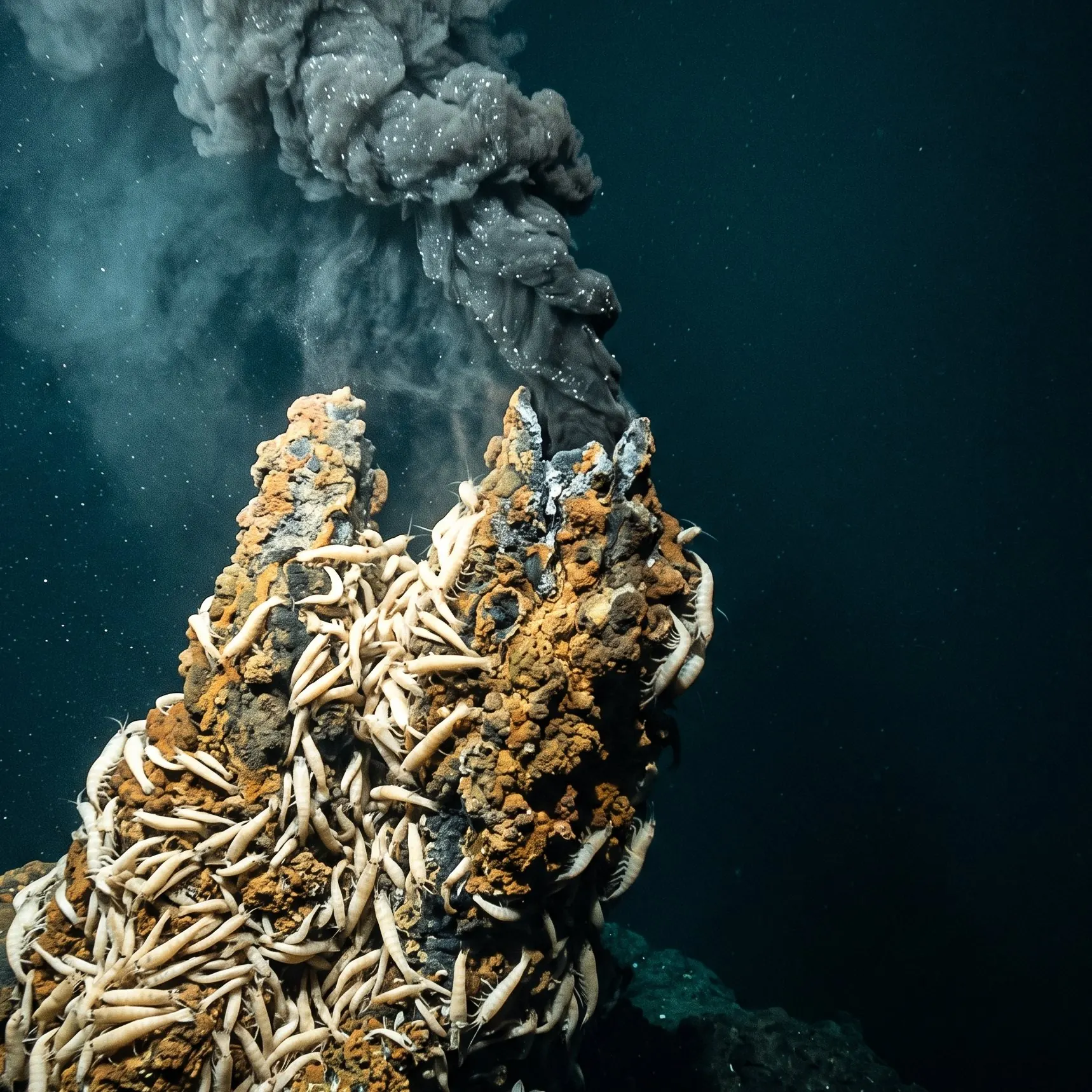
Plume ecology on the Mid-Atlantic Ridge

Followed a hydrothermal plume 300 m above a vent field south of the Azores, sampling the shrimp and fishes that gather in the particle-rich water. Stable isotopes traced vent carbon into midwater animals more than 2 km from the source.

Coordinates
37.2900° N, 32.2800° W
Max depth
2300 m
Season
2023
Partner
Ridge Ecosystems Consortium
A rust, ochre and black mineral chimney crowded with pale cream vent shrimp, a dark plume of hot water billowing from its peaks and drifting up to the left.
Vent shrimp crowd a black smoker on the ridge south of the Azores, 2300 m.

1000 to 4000 m

Light
None
Temperature
2 to 5°C
Pressure
100 to 400 atm

Bathypelagic

Midnight zone

Publications

Selected journal articles

Six recent peer-reviewed articles from 31. The full list with DOIs is on my institutional page.

  1. 2026

    Alarm displays of the crown jelly Atolla wyvillei recorded in situ at the Condor seamount

    Ocean Light Letters, in press First author

    Read article
  2. 2025

    Five years of moored acoustics reveal seasonal timing of diel vertical migration in the Bay of Biscay

    Journal of Midwater Ecology, 18(2), 211-229 Senior author

    Read article
  3. 2024

    Environmental DNA recovers gelatinous predators missed by nets over the Gorringe Bank

    Pelagic Systems, 9, 1-17 Corresponding author

    Read article
  4. 2022

    A shoaling oxygen minimum zone compresses lanternfish habitat off Cabo Verde

    Atlantic Journal of Ocean Ecology, 41(4), 388-402 First author

    Read article
  5. 2020

    Bioluminescent copepods as prey: trophic links to myctophid fishes in the northeast Atlantic

    Journal of Midwater Ecology, 13(1), 45-63 Co-author

    Read article
  6. 2017

    Spectral sensitivity of midwater shrimp eyes matches both downwelling and bioluminescent light

    Annals of Pelagic Biology, 64, 102-118 First author

    Read article

RecordCore sample

Experience, study and recognition

Positions

  1. 2019 to nowResearch scientist and principal investigatorTagus Marine Research Institute, Lisbon, Portugal

    Founded the Midwater Light Lab. Chief scientist on nine cruises and supervisor of six doctoral students.

  2. 2016 to 2019Postdoctoral researcherKestrel Bay Marine Laboratory, Plymouth, United Kingdom

    Built the moored acoustic array in the Bay of Biscay and ran its first three years of data.

  3. 2012 to 2016Doctoral researcherNorthern Atlantic University, Department of Oceanography

    Measured the visual sensitivity of midwater crustaceans on board and in the lab.

Education

  1. 2012 to 2016PhD in Biological OceanographyNorthern Atlantic University
  2. 2010 to 2012MSc in Marine BiologySouthern Coast University

Recognition

  1. 2024Early Career AwardEuropean Society for Midwater Research
  2. 2021Seagoing Science FellowshipTagus Marine Research Institute
  3. 2017Best Doctoral Thesis in Marine EcologyNorthern Atlantic University

4000 to 6000 m

Light
None
Temperature
2°C
Pressure
400 to 600 atm

Abyssopelagic

Abyssal zone

Contact

Send a signal to the surface

Open to research collaborations, berths for graduate students on upcoming cruises and talks for schools and museums.

Station
Lisbon, Portugal

The TidewaterBuild this oneAll templates
Dr. Inês Carvalho, The Tidewater demo | Syforia