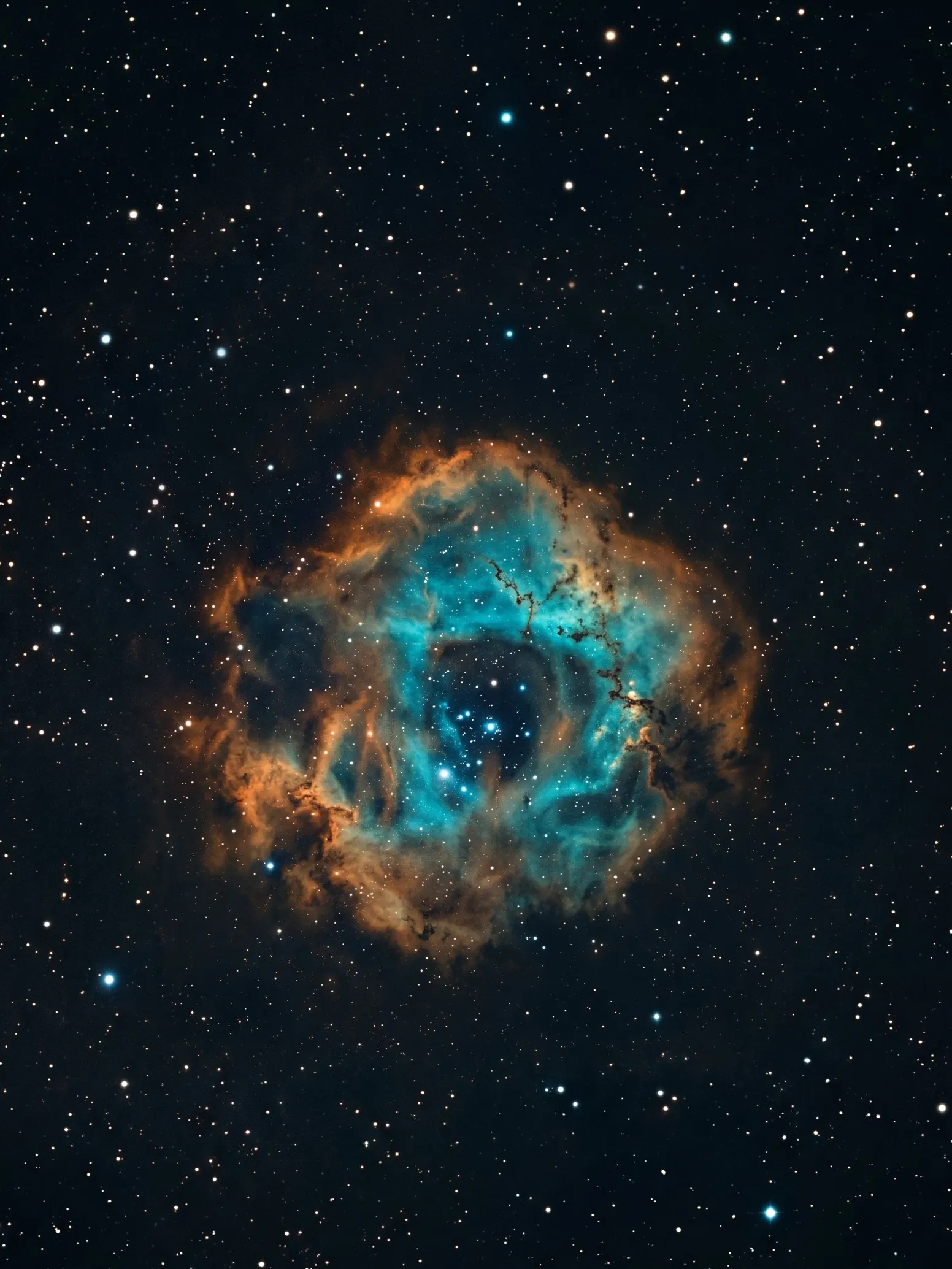
 NGC 2237174 × 300s
Rosette Nebula
Emission nebula- RA
- 06h 33m 45s
- Dec
- +04° 59′
- Filters
- Ha OIII
Bicolor, with hydrogen alpha mapped to amber and oxygen to teal. Five nights in January 2025, shot between snowstorms.
Astrophotography
Nathan Ellis, astrophotographer. Deep-sky images made from a backyard observatory in Flagstaff, Arizona, each one built from many hours of narrowband and color data. Limited print editions, dark-sky workshops and commissioned imaging.
About
I photograph faint things that take a long time to show up. Most of my plates hold 12 to 20 hours of light, collected over several nights from a roll-off roof observatory on the east side of Flagstaff, a city that has protected its night sky for decades. I came to imaging through physics and spent four years running public viewing nights before I went full time in 2019. Today the work splits three ways: limited print editions, small dark-sky workshops and commissioned images for planetariums and publishers.
Selected work
Each plate is a single target integrated over several nights, then calibrated and processed by hand. Every image is available as a signed print in an edition of 25.
Keep scrolling to pan the field
NGC 2237174 × 300sBicolor, with hydrogen alpha mapped to amber and oxygen to teal. Five nights in January 2025, shot between snowstorms.
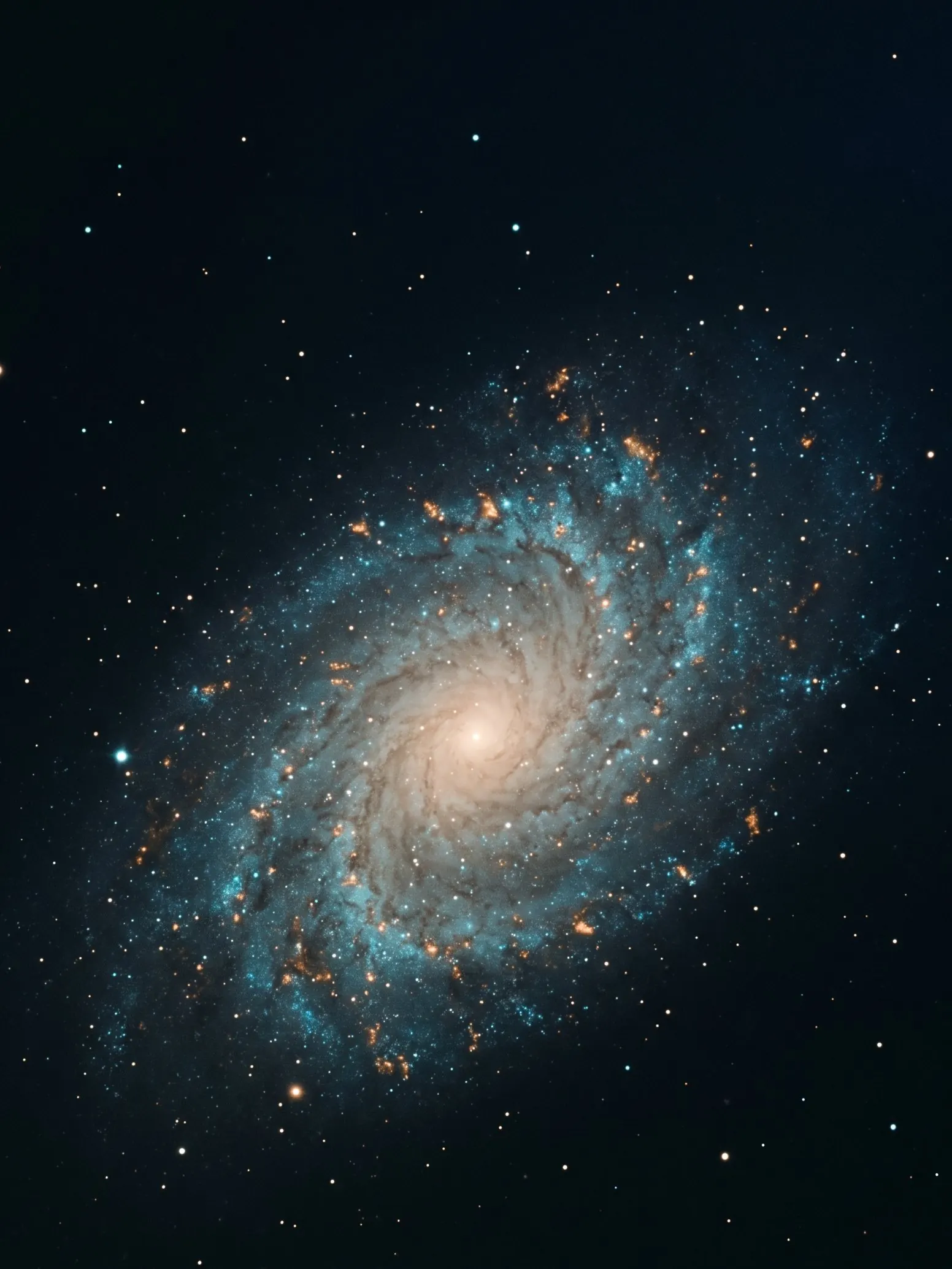 M 33420 × 120s
Luminance from the darkest nights of fall 2024, color added under a bright moon. Star-forming regions show as amber knots in the arms.
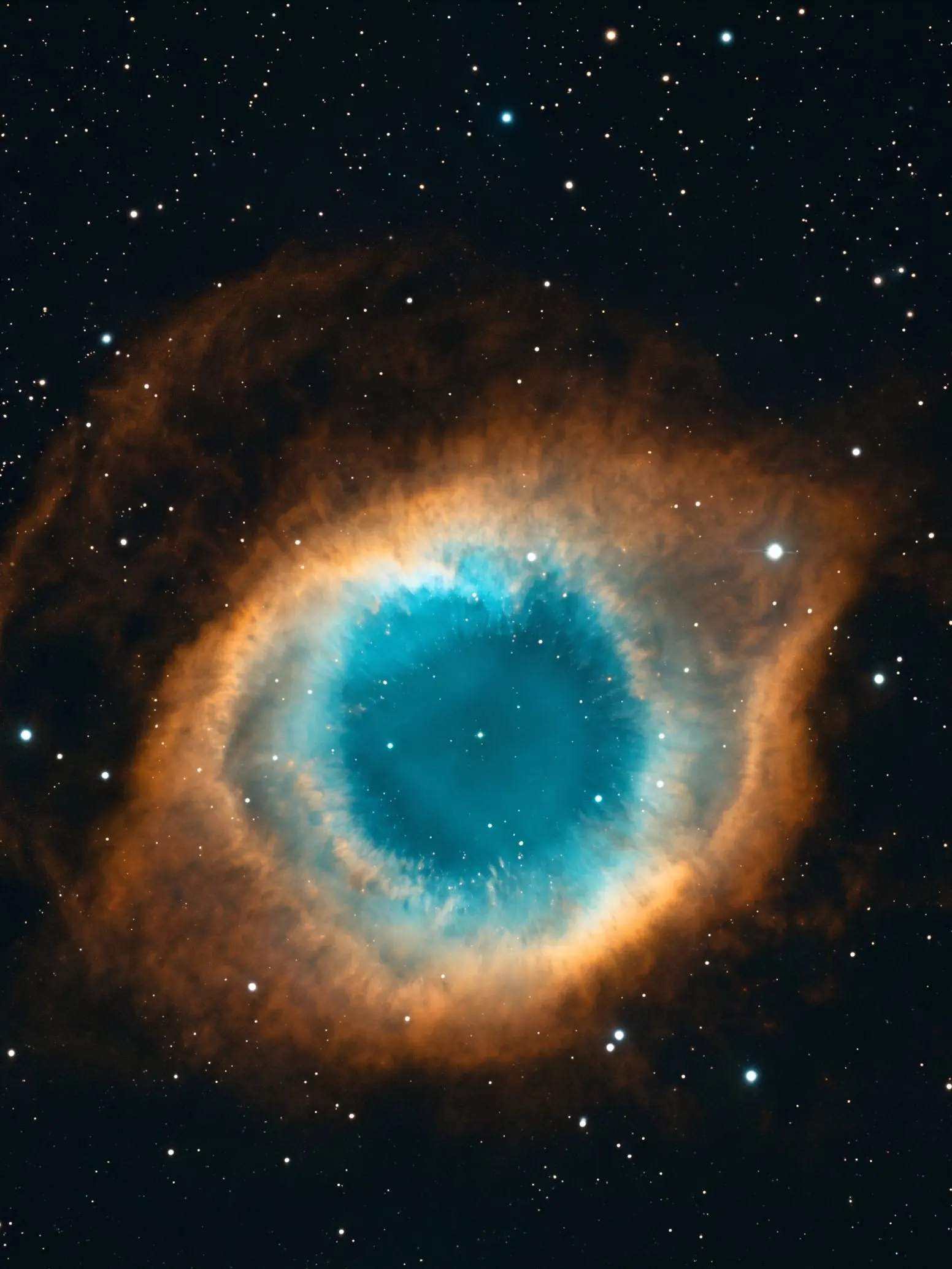 NGC 729396 × 600s
Low in the south from Flagstaff, so every sub was taken within two hours of transit. Sixteen hours across four nights in August 2023.
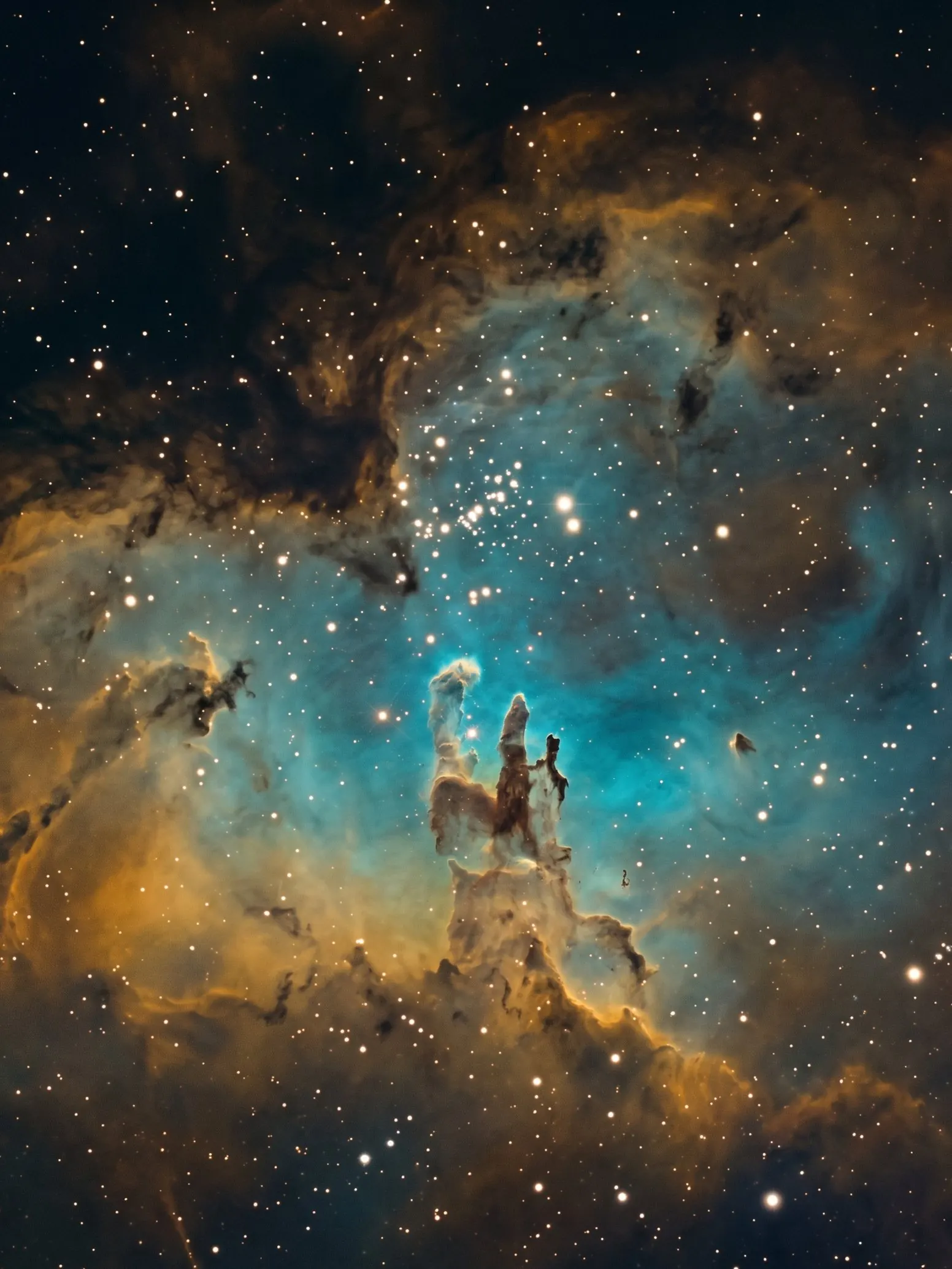 M 16180 × 300s
A wide field in the Hubble palette, 15 hours in all, with the three dust columns small at the heart of the cloud. Shot from a borrowed site south of Sedona in June 2026.
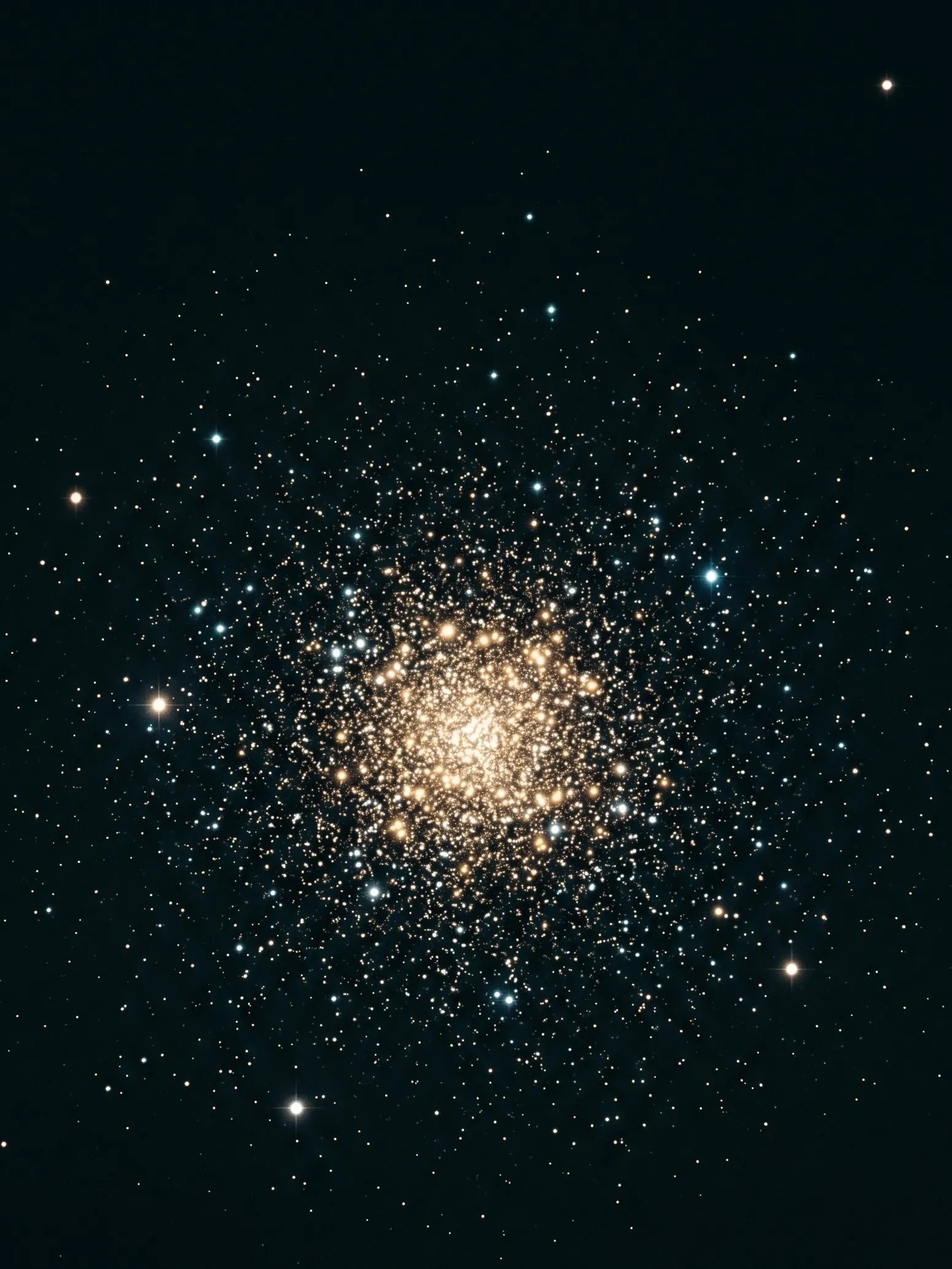 M 13240 × 60s
Short subs keep the core from clipping. Four hours of color data resolve stars almost to the center of the cluster.
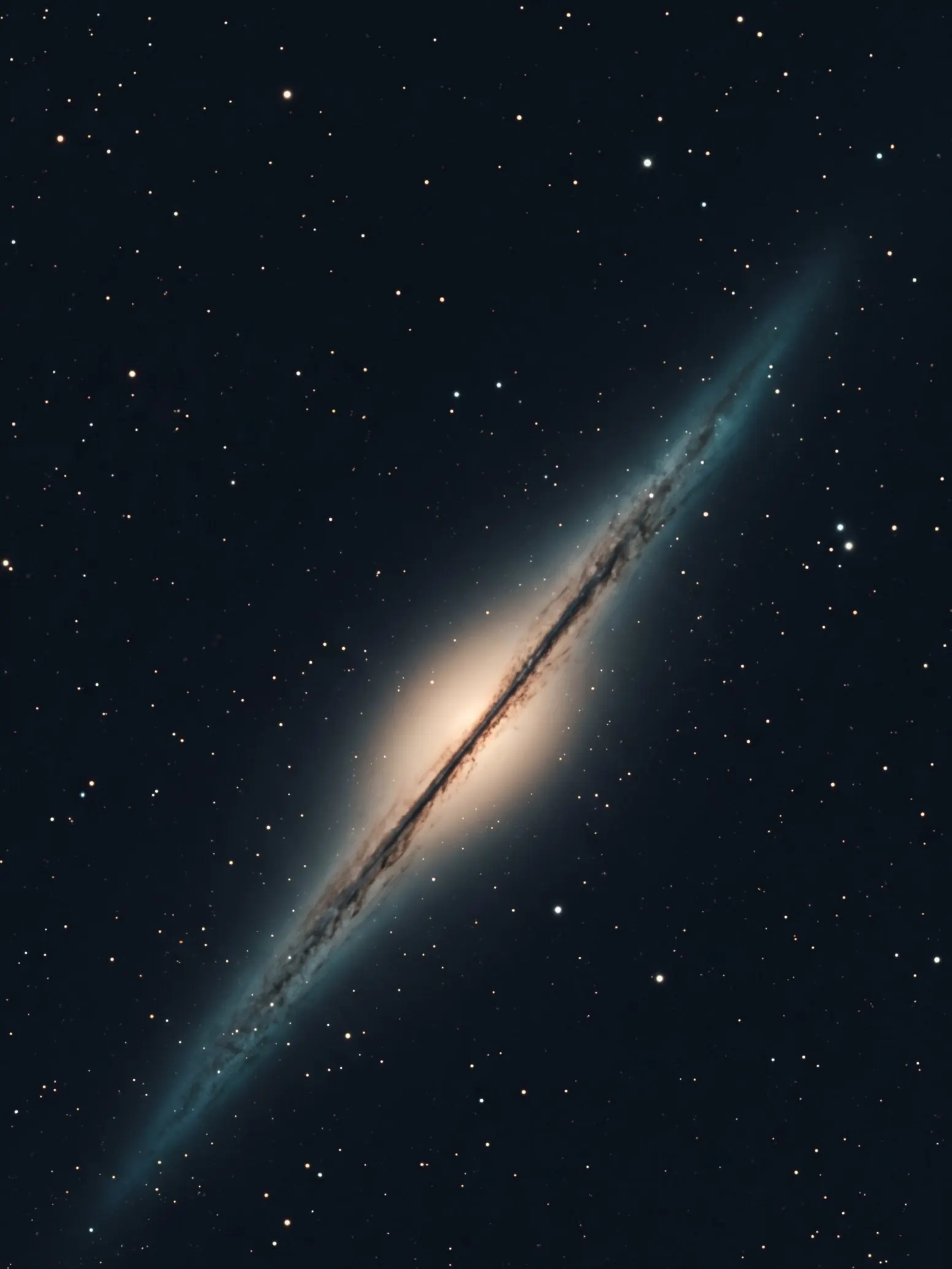 NGC 4565320 × 180s
A thin spiral seen exactly edge on. The dust lane resolved cleanly on a night of 1.4 arcsecond seeing in April 2026.
Method
Every plate goes through the same four stages. Most of the time goes into the first and the last; the night itself is mostly waiting and watching the guide graph.
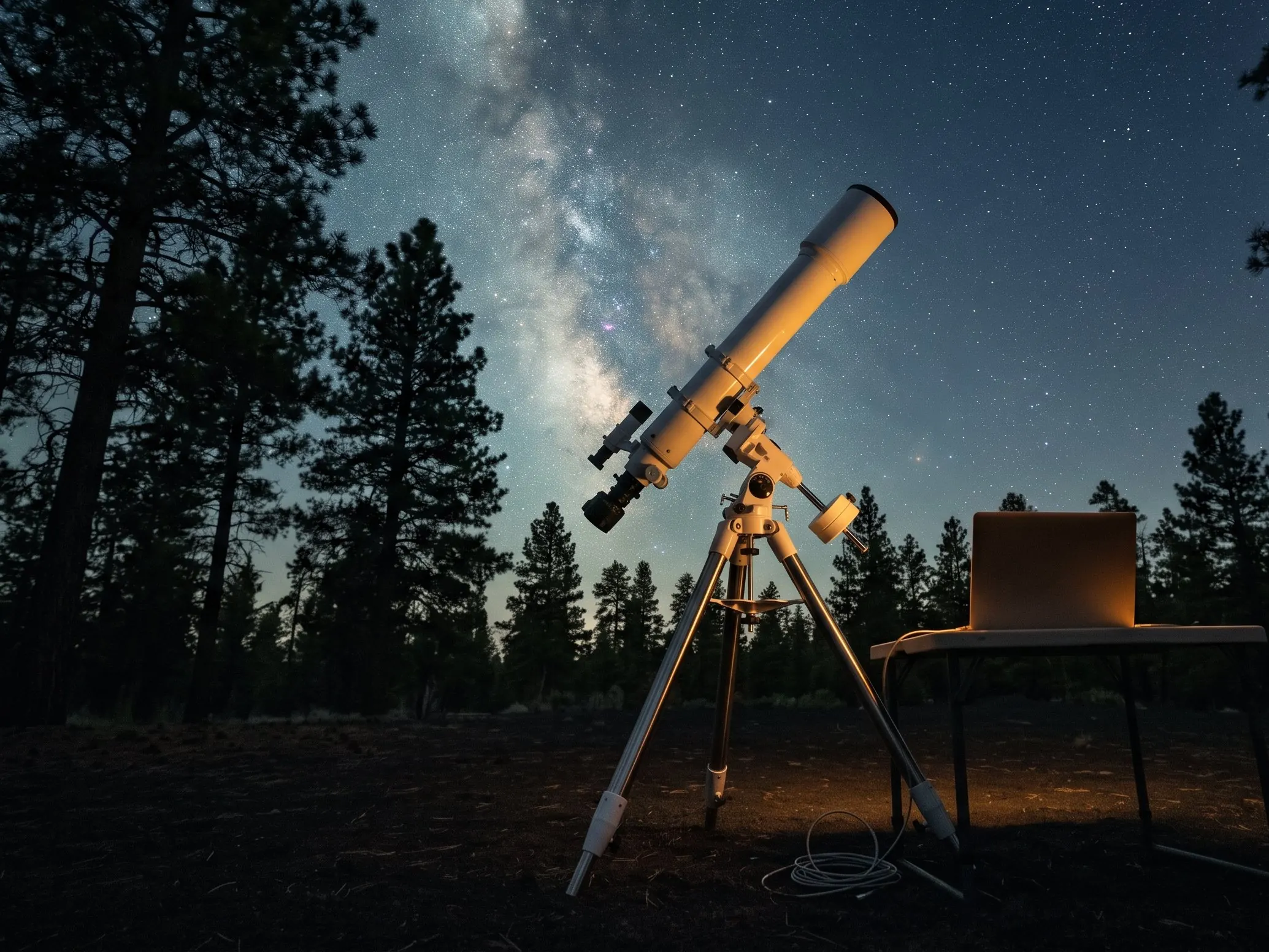
Choosing the window
Planning starts before dark. I check the transparency and seeing forecasts, the moon phase and when the target clears the pines to the east, then build a sequence that keeps it above 40 degrees for the whole run.
Guided sub-exposures
A cooled monochrome camera rides on a 130 mm refractor, guided by a small guide scope on the tube and dithered every third frame so walking noise never settles into the stack.
Darks, flats and bias frames
Each session gets fresh flats at dawn from a light panel, matched to that night's focus and rotation. Darks and bias frames come from a library rebuilt every season at the same sensor temperature.
Stacking, stretching and color
Frames are graded, registered and integrated in PixInsight, then stretched by hand. Narrowband data is mapped to color with restraint, so faint structure stays faint and stars keep their true color.
Observation log
The 2026 season so far, from spring galaxies through the summer nebulae to the targets queued for the next new moon.
| Date | Object | Type | RA | Dec | Exposure | Filter | Status |
|---|---|---|---|---|---|---|---|
| 2026.04.18 | NGC 4565 | Edge-on galaxy | 12h 36m 21s | +25° 59′ | 320 × 180s | LRGB | Processed |
| 2026.05.23 | M 13 | Globular cluster | 16h 41m 41s | +36° 28′ | 240 × 60s | RGB | Processed |
| 2026.06.20 | M 16 | Emission nebula | 18h 18m 48s | −13° 49′ | 180 × 300s | SHO | Processed |
| 2026.08.14 | M 27 | Planetary nebula | 19h 59m 36s | +22° 43′ | 108 × 300s | OIII | Processed |
| 2026.09.12 | NGC 6960 | Supernova remnant | 20h 45m 38s | +30° 42′ | 120 × 300s | Ha | Logged |
| 2026.09.27 | IC 1805 | Emission nebula | 02h 33m 22s | +61° 27′ | 64 × 300s | Ha | Logged |
| 2026.10.10 | NGC 869 | Open cluster | 02h 19m 00s | +57° 08′ | 90 × 60s | RGB | Queued |
| 2026.10.17 | M 31 | Spiral galaxy | 00h 42m 44s | +41° 16′ | 300 × 120s | LRGB | Queued |
Recognition
Contact
Prints ship from Flagstaff. Workshops run on new moon weekends from March to November, with six seats so everyone gets time at the mount and the laptop.