Infrastructure
A winter with the crane operators, checkers and lashers who move fruit, steel and cars off the ships before most of Philadelphia wakes up.
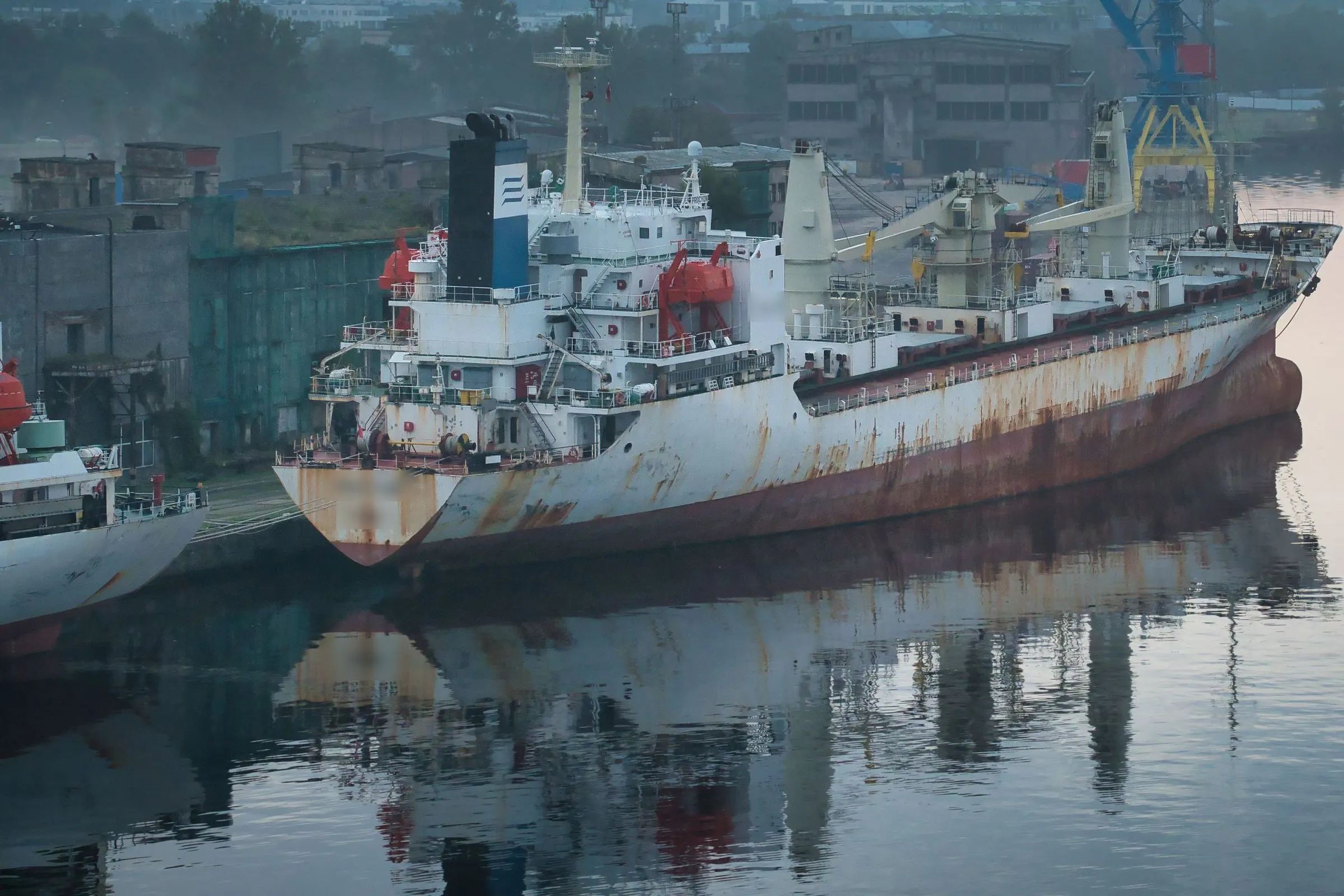
Philadelphia The first ship of the night comes up the Delaware a little after eleven, riding low with grapes and clementines from the Southern Hemisphere. By the time it is tied off, Denise Okafor is already 130 feet above the pier in the cab of a crane, a thermos wedged beside her left boot and a radio clipped to her collar.
She has worked the river for nineteen years. In that time the boxes have grown, the ships have doubled in length and the cranes have learned to talk back, flashing load weights and wind speeds on a screen she mostly ignores. “The screen tells you what the box weighs,” she said. “The wire tells you what it is doing.”
Most of Philadelphia never sees this part of the city. The terminals sit behind fences south of the stadiums, lit like ballfields all night. The work done there reaches the rest of the region as a full produce aisle and a new car on a lot by Thursday.
Over a winter of night shifts I followed one gang of fourteen through the arrival of nine vessels. The rhythm is set by the tide and by the ship's own schedule, which is set somewhere far away by people who will never stand on this pier.
Nobody thanks the port. They thank the store.
Port, continued
The lashers go first, unlocking the steel twist locks that hold the containers to each other through an ocean crossing. It is the most dangerous job on the pier and the one least forgiving of weather. In January the bars freeze to their gloves.
Automation is the word everyone on the pier says without being asked. Newer terminals on the Gulf Coast and in northern Europe run their cranes from offices miles away. Here, the contract still puts a person in every cab. The crews know to the month when that contract ends.
At 5:40 in the morning the last box swings onto a chassis and a truck pulls it toward the interstate. Okafor climbs down the ladder one rung at a time and walks to her car as the first commuters cross the bridge overhead. “Nobody thanks the port,” said Marcus Bell, a checker who has worked beside her for a decade. “They thank the store.”
Adapted from a longer feature first published in Northline Magazine.